
Young Living sources oils from three types of suppliers:

    • 1.

Corporate Farms

    • – owned, managed and run by Young Living


    • 2.

Partner Farms

    • 3.

Seed To Seal Certified Suppliers

The same level of quality is expected regardless of where we get our oils. Whether they come from our farms, our partner farms or one of our Seed To Seal Certified Supplier, the bar is always the same. 100% Seed to Seal quality.

Seed To Seal Certified Suppliers

Every single supplier has to must meet Young Living’s standards. We do stringent quality testing. We make sure all of the documentation is there. This testing is done every single time we get a batch of oil from a supplier. We are very serious about what we expect from our suppliers. Each supplier must go through Seed To Seal training and certification. They cannot supply to us unless they go through this process.

Then once through the training process they must sign a declaration that they WILL comply with Seed To Seal. It’s a contract and they are held accountable. They are also required to understand strict compliance rules and must comply with their country’s rules but also laws within the US.

Enhanced visits
Many supplier distilleries are shocked when YL comes to visit. They say none of the other companies they have supplied have ever come to see how we do things. The only way you can check all of that is if someone is there. So we go there to make sure they are following the rules.

When we visit a supplier, we want to know some things that contribute to the quality of the oil. Where do their seeds come from? In the example of ylang ylang trees, where did they get those trees 15 or 20 years ago when they were first planted?
As you replant, where did that come from? We watch the distillation process. We also ask to see record keeping. How do they
keep track of their distillation. How do they keep track of inventory. How they keep track of the people who work for them. How are they being paid? Business licenses, proof of taxes being paid. We don’t just want to be sure the oils are being produced the right way, we want to make sure they are running their company the right way.
Next Level is Partner Farms

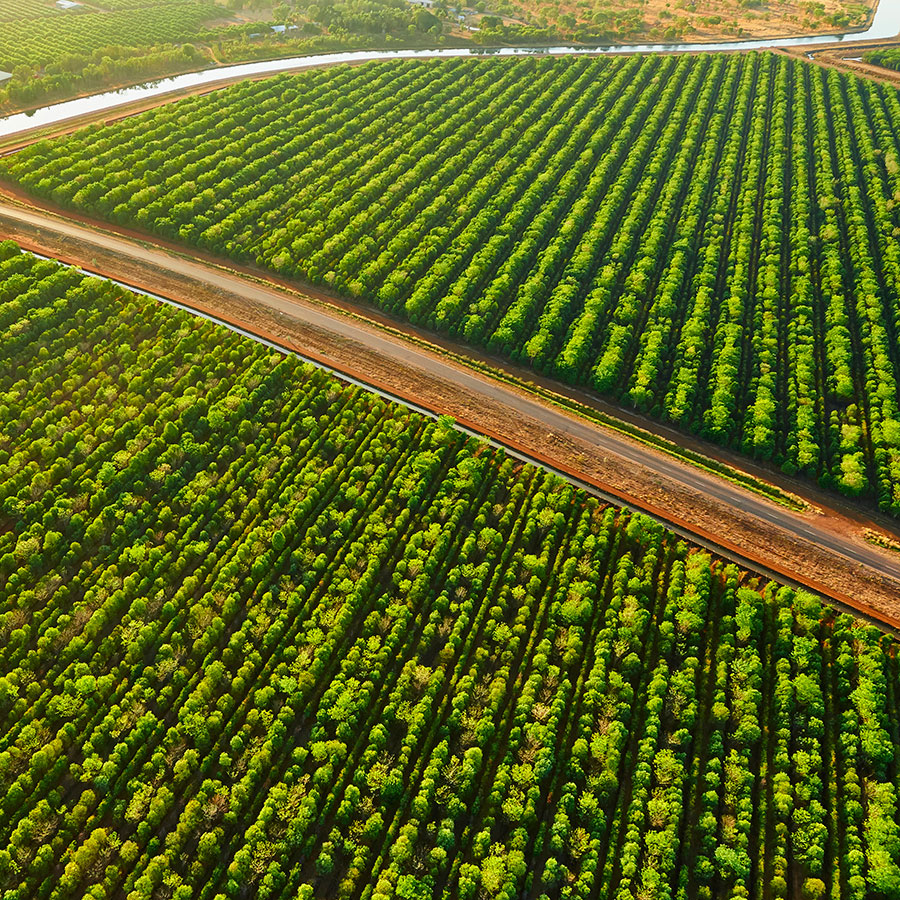
Once a supplier qualifies to this level, Young Living then provides significant capital investment in the farm. We rebuild the distillery. Resources and go there for the long term to teach them each step of the process and give them even more skills than they had to date. More tools and resources. Longer term contracts. Exclusive relationships with them. They only sell to Young Living and not to a competitor.

New Partner Farm in Quintis Farm in Perth, Australia – Sacred Sandalwood

Newest Partner Farm – Balkan Botanical Farm in Bulgaria
This farm will be producing Roman Chamomile and Valerian. We have not had these oils in over 2 years. Over the years many samples of these oils have been submitted to Young Living but they did not meet Seed to Seal quality standards so they were rejected. We are not willing to compromise our quality standards. We would rather not have the oil, than sell a lower quality product.

Be

sides the corporate owned farms, there are currently 7 Partner Farms. This number is growing as we turn Certified Suppliers into Partner Farms.

Corporate Farms

Corporate farms are owned and operated by Young Living. More on Young Living Farms
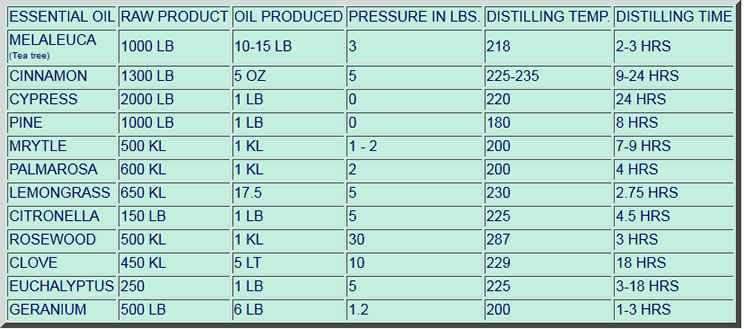
 

Distillation can determine the value of the oil, or destroy the value of the oil.

Essential oil distilling is not just a job, but an art. The operator of the distiller must have a full understanding of the value of oils in order to produce quality oils. If the pressure is too high, or the temperature is too high, it may change the molecular structure of the fragrance molecule, altering the chemistry constituents.

For example – distillation of lavender should not exceed 3 pounds of pressure, temperature should not exceed 245 degrees & should be distilled for 2 hours. A distiller who is only interested in profit will distill lavender for 15 minutes at very high temperature & very high pressure.


.

Most people read the label on essential oils bottles and see the words “100% PURE” and think that is a high quality oil. There is so much more involved in producing truly authentic premium grade oils.

The key to producing an genuine authentic grade essential oil is to preserve as many of the delicate aromatic compounds within the essential oil as possible. Most of these elements are very fragile and are destroyed by high temperature and high pressure.

Nutritionists tell us not to boil our vegetables because the hot water removes the vitamins and nutrients. Similarly, “boiling” plants to extract their essence destroys many of a plant’s fragile constituents, which gives essential oils their beneficial properties. So keeping the distiller’s temperature low is a must.

Distillation can determine the value of the oil, or destroy the value of the oil. Essential oil distilling is not just a job, but an art. The operator of the distiller must have a full understanding of the value of oils in order to produce quality oils. If the pressure is too high, or the temperature is too high, it may change the molecular structure of the fragrance molecule, altering the chemical constituents.

Essential oils MUST be distilled for the proper length of time to release all their active constituents. A distiller who is only interested in profit will distill oils for 15 minutes at very high temperature & very high pressure. This way they can produce more oil and thus more profits.

For example, cypress must be distilled for 24 hours to release all the chemical constituents. Most distilling operations, throughout the world, only distill cypress one hour and 15 minutes.

Similarly, lavender does not produce all its beneficial properties unless it is distilled for one hour and 30 minutes; but most lavender is distilled for only 15 minutes!

Three-quarters of the volume is extracted during the first quarter of the distillation process. Many producers end the process there because the increased time does not significantly increase the volume. Time is “only” a crucial factor to extracting the plant’s beneficial properties. Lavender should be distilled at no more than 3 pounds of pressure, a temperature of no higher than 245 degrees, and should be distilled for 2 hours.

Another trick some distillers will do to produce more oil, is to redistill the plant material over and over as many as 5 or 6 times. It’s like using a tea bag over & over again. When the plant material is redistilled, all the batches after the first distillation are no longer authentic premium grade.

The oil distiller will then save the first batch to be sold as authentic premium grade oils. Then the rest of the distillations are sold to the unsuspecting public as so called “pure” oils.

There are many other factors that effect the quality of the oil.

A few examples:

How long did the plant material sit around before it was distilled?

Is the distiller made of chemically reactive metals or was it stainless steel?

Was the soil fertilized with chemical fertilizers or organic fertilizers?

Were any chemicals added to the distillation water?

Note: Many distillers add chemicals to the water as they are distilling to produce greater volume in the distillation process. They can say they don’t use adulterants in the oil since they only used it in the water. The chemical still gets into the oil and it is stretching the truth to say an oil distilled this way is pure.

Don’t be afraid to ask questions about the origins, extraction process, and quality of any essential oil you purchase. Insist on essential oils extracted from organically grown plants, with no chemicals in the extraction process, at the proper temperature and pressure, for the appropriate length of time. If we remain ignorant and continue to emphasize price instead of quality, essential oils will indeed be nothing more than a charming novelty item.


.

There is much more involved in the quality of oil than most people realize. The oils must be distilled SLOWLY at low temperature & low pressure. They also must be the right species of plant.

Take lavender oil for example. It is most popular oil of all the essential oils. It is also one of the most widely adulterated. It also makes a great deal of difference what species of lavender is used.

The notes below come from Marcy Foley’s book
Embraced By The Essence.”

    • Take note of how many pounds of plant material it takes to produce a pound of essential oil.

170 to 250 pounds of lavender angustafolia plant material to produce 1 pound of oil

35 pounds of Lavendula hybrida/grosso to produce 1 pound of oil.

When it only takes 35 pounds of plant material to produce a pound of oil, they can make more low grade oil – – and – – a lot more money.

True lavender oil (Lavandula angustifolia) is fairly expensive and difficult to locate. Some unscrupulous brokers market an engineered hybrid “lavendin” as true Lavandula officinalis. These brokers hope to represent lavendin as true lavender to increase
profits.

Lavender has a fresh, sweet, balsam-like scent. There are over 100 categories of lavenders grown and distilled in the world. Some include:

Angustafolia

    • – This is a Lavender cultivated from the wild which grows at about 3000 feet above sea level. To get one pound of oil requires from 170 to 250 pounds of plant. This is the Lavender which contains sesquiterpenes.

Verifolia – A wild Lavender that grows between 4000 and 6500 feet above sea level will produce one pound of oil from 250 to 300 pounds of plant.

Stoechas – Lavendula Stoechas, a very fine cultivated Lavender, grows at about 2000 feet above sea level.

Lavendula hybrida/abrial – A hybrid lavendin, grows at about 500 feet above sea level This is a cheap oil used in the cosmetic industry and is one of the primary “Lavenders” coming into North America.

Super — A hybrid lavendin, which grows at 800 to 1000 feet above sea level. It is a cheaper oil with a better fragrance and is used primarily in the perfume industry. This oil is high in terpene and linalol, so it goes a long way in perfumery. It is used in cosmetics because it is extends the fragrance and the high terpene content is drying to the skin.

Lavendula hybrida/grosso – A cheap, hybrid lavendin which grows at sea level. It is highly antiseptic and is used by veterinarians in Europe as a sterilizing agent. It has an alcoholic-terpene fragrance which is sharp, rather than pleasant. This is the oil most often sold in Canada and USA as “Lavender”. It will produce 1 pound of oil from 35 pounds of plant material.

Lavendin oils are hybrids between true Lavender and spike Lavender. Their properties are an intermediate between the two oils. They are lower in ester content than true Lavender, and contain around 10% camphor.

Lavender is the most widely used oil and therefore the most adulterated oil. There are 221 commercial and industrial uses for Lavender oil outside of the cosmetic world. It is used in motor oils and greases in Europe because it makes the lubricant penetrate better.

The cheaper Lavendins are used in plastics because they make the plastic more adhesive and bond better. A Lavender liqueur is made in France. Lavender is known as a universal oil in which over 500 constituents have been identified as of 1994.

Did you know …

  • In the U.S. all you need is 5% of the essential oil in the bottle to be able to call it 100% pure.
  • Proctor and Gamble consumes 100 times the lavender oil that is produced in the world. How does anyone stand a chance to get good oil if they don’t grow their own?
  • Young Living is the largest grower of essential oil plants in the world.


.

9 Dirty Tricks Commonly Used to Extend Profit

Does your Essential Oil Supplier use Any of These 9 Dirty Tricks and Adulterations Commonly Used to Extend Profits? Unfortunately not all essential oils are created equal. In fact many, if not all the oils on the market are what is called “perfume quality” or “4th & 5th quality oils.

These are over-processed, chemical laden, highly adulterated and de-natured products that, in reality, are little more than cheap perfume made from various odorous plants. This includes oils found in health food stores. Many people think that when they buy an oil that is labeled as “100% pure” they are getting good oils. This is far from true.

Pure unadulterated essential oil is very hard to come by & can be very expensive. One reason for this is because it can take as many as 500 to 2,000 pounds or more of raw plant material to produce just a pound of pure essential oil.

Fact – The words “Pure” or “100% Pure” on the label can mean nothing more than the oil has not been diluted with a carrier oil or another cheaper essential oil.

Fact – In the U.S., a company can have the word Pure on the label with as little as 5% essential oil in the bottle. This just means that they have some of the real oil in the bottle.

Fact – Chemical additives can be included in some so called Pure Essential Oils.

Fact – Chemical additives fracture the molecular structure of essential oils, altering their chemical constituents, thus destroying their beneficial properties. And, of course, the chemicals themselves may present a health risk.

9 Dirty Tricks Essential Oil Suppliers use to Increase Profit:

1. A common way to extend the volume of an oil is to simply add alcohol, propylene glycol, or acetate to the distilled essential oil.

2. Some oil producers add synthetic oils to the so called “Pure” oil.

3. Some oil producers do not actually add chemicals to their oils. Instead, they inject chemical solvents into the water in their boilers during the distillation process, increasing output by about 18%. Imagine what happens to essential oils when chemicals are added to water, which is boiled into steam and then forced into plants to extract their oil. It is impossible for an essential oil extracted through this method to avoid containing at least SOME of these chemical additives.

4. Many essential oils are produced by solvent extraction & can wear the label “pure” essential oils. With the solvent extraction process essential oils are extracted by immersing plants in chemical solvents, such as hexane, petroleum benzine, ether, or carbon tetrachloride. These extraction processes both destroy essential oil’s beneficial properties and bring their own health risks from the residual chemical additives which remain in the essential oils they produce.

5. Redistilling Plant Material: Essential oil producers often increase profits by redistilling plant material in as many as 5 or 6 distillations. They save the first distillation for authentic premium grade essential oils, then selling the second, third and so on to the unsuspecting public. Imagine if you are using a teabag over and over. The first cup of tea tastes good but the second is not nearly as good, let alone 3rd, 4th 5th.

6. High Pressure, Heat Distilling: Distillation at lower temperatures and low pressure is the preferred method for producing high quality, pure essential oils. Imagine pressure cooking a salad: Nutritionists tell us not to boil our vegetables because the hot water removes the vitamins and nutrients. Similarly, “boiling” plants to extract their essence destroys many of a plant’s fragile constituents, which gives essential oils their beneficial properties. Keeping the distiller’s temperature low is a must. Essential oils MUST be distilled for the proper length of time to release all their active constituents. For example, cypress must be distilled for 24 hours to release all the chemical constituents. Most distilling operations, throughout the world, only distill cypress one hour and 15 minutes. Similarly, lavender does not produce all its active constituents unless it is distilled for one hour and 30 minutes; but most lavender is distilled for only 15 minutes! Three-quarters of the volume is extracted during the first quarter of the distillation process. Many producers end the process there because the increased time does not significantly increase the volume. Time is “only” a crucial factor to extracting the plant’s properties.

7. Soil Quality/ Pesticides: Another factor in the purity of the oils is the land on which the plants are grown. Inexpensive essential oils are usually produced by large farm operations that use chemical fertilizers and pesticides. Pesticides are oil-soluble and residue remains in essential oils extracted from pesticide-treated plants. Some of the lavendin grown in Russia and China (used to make much of the so-called lavender oil sold around the world) actually contains radioactive isotopes because of the nuclear fallout from Chernobyl. Imagine using an essential oil extracted from plants containing radioactive isotopes AND to which chemicals have been added to extend the oil – synthetic linolol acetate to improve the fragrance, and propylene glycol to increase the volume!

8. Passing Off Hybrids as Pure: Some unscrupulous brokers market an engineered hybrid “lavendin” as true Lavandula officinalis. Lavendin can be adulterated by flashing off (burning off) the camphor and adding synthetic linalyl acetate. These brokers hope to represent lavendin as true lavender to increase profits.

9. In addition, some bottles do not contain the oil stated on the label. Oils marked as “clove” may be distilled from the leaf instead of the bud. Clove leaf oil is less expensive but does not have the same chemistry or beneficial properties as clove bud oil. Many times, essential oils marked “cinnamon” are actually “cassia.”

Fact:- According to an independent laboratory in California, Flora Research, MOST essential oils sold are either synthetic or adulterated with chemical additives.

.